Millions of people struggle with sleep-related issues like insomnia, frequent awakenings, or non-restorative rest. While medication and lifestyle changes can help, they often overlook the root neurological causes of poor sleep. That’s where brain mapping for sleep disorders steps in as a powerful tool for identifying the exact imbalances in brainwave activity that may be interfering with sleep quality.
What Is Brain Mapping?
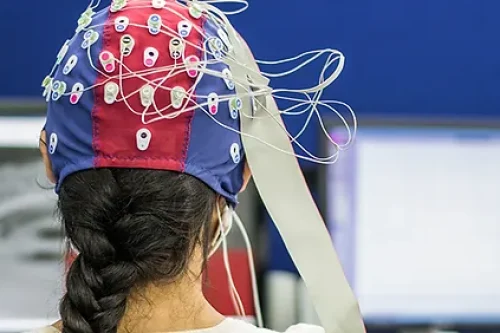
Brain mapping, also known as qEEG (quantitative electroencephalogram), is a non-invasive technique that visually captures brainwave patterns. It shows clinicians where the brain is overactive, underactive, or not functioning in synchrony. When applied to sleep disorders, brain mapping for sleep disorders allows practitioners to see whether certain patterns—such as excess high-beta waves (linked to anxiety) or insufficient delta waves (needed for deep sleep)—may be causing sleep disruptions.
The Neurological Roots of Sleep Problems
Sleep disorders are often rooted in how the brain functions before, during, and after sleep. Common findings in qEEG scans for clients with sleep issues include:
- High beta wave activity (associated with racing thoughts or overthinking before bed)
- Low theta or delta waves (which are essential for deep and restorative sleep)
- Imbalances between the brain’s hemispheres, impacting relaxation and arousal balance
By analyzing these patterns with brain mapping for sleep disorders, clinicians can recommend targeted neurofeedback therapy or other brain-based interventions to restore healthy sleep rhythms.
Benefits of Using Brain Mapping for Sleep Treatment
- Personalized treatment based on actual brain data, not just symptoms
- Drug-free intervention for people who want to avoid sleeping pills
- Early identification of neurological patterns that may lead to chronic sleep issues
- Trackable progress, as future scans can show how brainwave activity improves
Brain mapping for sleep disorders not only provides diagnostic clarity but also creates a clear roadmap for healing the brain’s sleep architecture.
 Real Results with Brain Mapping
At Connected Brain Counseling, we’ve seen individuals go from chronic insomnia to restful, uninterrupted sleep using neurofeedback and brain mapping protocols. With the insights gained through brain mapping for sleep disorders, clients can better understand why they struggle and receive customized plans that promote true healing, not just symptom management.
- Cleveland Clinic explains how qEEG is used to assess sleep patterns and guide treatment in neurological and psychiatric conditions.
https://health.clevelandclinic.org/qeeg-brain-mapping - National Sleep Foundation outlines how different brainwave patterns (theta, delta, beta) relate to sleep cycles and how imbalances affect rest.
https://www.sleepfoundation.org/how-sleep-works/brain-waves-and-sleep - Psychology Today discusses how brain mapping can reveal hidden causes of chronic insomnia and guide neurotherapy.
https://www.psychologytoday.com/us/blog/sleep-newzzz/202111/brain-mapping-and-insomnia
If you’ve been battling sleep issues without answers, brain mapping for sleep disorders can provide a science-backed solution. At Connected Brain Counseling, we help you uncover the neurological reasons behind poor sleep and offer brain-based therapies that deliver lasting results. Book your free consultation today and start sleeping better—naturally.