In today’s fast-paced world, the ability to adapt quickly, shift perspectives, and respond flexibly to new challenges is more important than ever. Cognitive flexibility—the mental skill that allows us to change our thinking patterns and adjust to new situations—is essential for problem-solving, learning, and emotional regulation. Unfortunately, stress, anxiety, trauma, and even aging can reduce this flexibility. Fortunately, neurofeedback for cognitive flexibility offers a non-invasive way to retrain the brain, improving focus, adaptability, and creative problem-solving.
Understanding Cognitive Flexibility
Cognitive flexibility refers to the brain’s ability to shift attention, adapt to changing environments, and integrate new information effectively. It plays a critical role in executive functioning—skills that include planning, working memory, and decision-making. A flexible mind allows people to switch tasks smoothly, handle unexpected challenges, and maintain emotional balance even in stressful situations.
When brainwave activity becomes rigid or overly synchronized in certain regions—such as the prefrontal cortex—it can lead to mental “stuckness.” This may manifest as overthinking, difficulty adjusting to change, or emotional inflexibility. Neurofeedback directly targets these patterns to restore balance and flexibility.
How Neurofeedback Improves Cognitive Flexibility
Neurofeedback works by training the brain to self-regulate. During a session, sensors placed on the scalp measure brainwave activity in real time. The individual receives feedback—through visual or auditory cues—when their brain produces more balanced and efficient activity. Over time, this process teaches the brain to operate with greater flexibility and control.
Through neurofeedback for cognitive flexibility, individuals learn to reduce overactivation in areas associated with stress and anxiety, while enhancing communication between brain regions responsible for focus, creativity, and problem-solving.
 Key Benefits of Neurofeedback for Cognitive Flexibility
- Enhanced Adaptability: Clients experience improved ability to shift attention and strategies in changing environments.
- Better Emotional Regulation: By promoting balance in brainwave activity, neurofeedback reduces emotional rigidity and stress reactivity.
- Improved Creativity: A flexible brain fosters divergent thinking and innovation.
- Increased Focus and Mental Clarity: Training helps reduce mental fatigue and overthinking, allowing for clearer, faster decision-making.
- Resilience Under Pressure: Individuals report feeling calmer and more capable of adapting to high-stress situations.
Applications Across Different Populations
- Students and Professionals: Improves multitasking, memory retention, and concentration.
- Athletes and Performers: Enhances focus and the ability to recover from mistakes quickly.
- Individuals with Anxiety or ADHD: Helps reduce cognitive rigidity and supports more balanced thought processes.
- Older Adults: Promotes neural plasticity, potentially counteracting age-related cognitive decline.
Scientific Insights Supporting Neurofeedback for Cognitive Flexibility
Research published in Frontiers in Human Neuroscience and NeuroImage has demonstrated that neurofeedback can strengthen communication between the prefrontal cortex and other brain regions, leading to greater mental flexibility and adaptive thinking. These studies show measurable improvements in performance on tasks that require quick decision-making and creative problem-solving.
Integrating Neurofeedback into Cognitive Training Programs
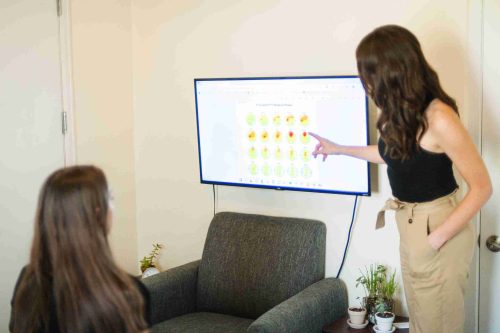
At Connected Brain Counseling, we use brain mapping (qEEG) to identify specific areas that may be contributing to rigidity or reduced adaptability. Based on these findings, we design a personalized neurofeedback plan to promote optimal brainwave balance and cognitive flexibility. Many clients notice significant changes after just a few sessions—reporting improved creativity, focus, and resilience in both personal and professional settings.
A Smarter, More Adaptable Mind
In a world that demands constant adaptation, neurofeedback for cognitive flexibility offers a powerful, evidence-based path to enhance mental agility and emotional balance. Whether you’re looking to boost creativity, perform better under pressure, or simply think with greater clarity, neurofeedback can help unlock your brain’s full potential.
Ready to train your brain for greater adaptability and focus?
Contact Connected Brain Counseling today for a free consultation and discover how neurofeedback can transform the way you think, feel, and perform.
- Frontiers in Human Neuroscience – Neurofeedback and Cognitive Flexibility – Reviews studies showing improvements in executive function and adaptability after neurofeedback training.
- NeuroImage – Neural Plasticity and Self-Regulation Through Neurofeedback – Explores how neurofeedback enhances brain connectivity and cognitive performance.
- American Psychological Association – Cognitive Flexibility and Mental Health – Discusses the importance of mental flexibility in overall emotional well-being.