What Is Brain Mapping and How Does It Work?
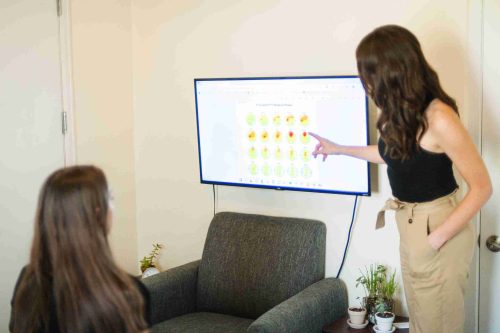
Brain mapping, or qEEG (quantitative electroencephalography), measures electrical activity across various regions of the brain. The data collected reveals how well these regions are functioning and whether there are irregular patterns that may be influencing thoughts, behaviors, and emotional responses.
The process involves placing sensors on the scalp to detect and record brainwave activity. These patterns are then analyzed and compared to a normative database, helping clinicians visualize neurological imbalances with remarkable precision.
How Brain Mapping Identifies the Roots of Social Anxiety
Social anxiety isn’t just psychological—it often has measurable neurological components. Brain mapping can reveal specific dysfunctions, such as:
- Overactivity in the amygdala or limbic system, which can amplify fear and emotional reactivity.
- Underactivity in the prefrontal cortex, reducing rational processing and emotional regulation.
- Hyperarousal patterns, often in the beta frequency range, which are associated with worry, overthinking, and self-consciousness.
By identifying these patterns, brain mapping for social anxiety allows professionals to target the exact neurological mechanisms contributing to someone’s symptoms, rather than relying on guesswork.
Personalized Treatment Based on Brain Mapping
Once brain mapping reveals the unique patterns linked to social anxiety, clinicians can design a customized treatment plan that may include:
- Neurofeedback Therapy to retrain the brain into more stable and balanced activity.
- Cognitive Behavioral Therapy (CBT) with a focus on the regions of the brain that are under- or over-functioning.
- Mindfulness or relaxation techniques tailored to the client’s neurological profile.
This integrative approach significantly increases the chance of meaningful, lasting progress.
 Real-Life Benefits of Brain Mapping for Social Anxiety
- Clear Understanding of the Problem: Clients gain insight into how their brain contributes to their symptoms.
- More Effective Interventions: Treatment becomes tailored, not generic.
- Progress Tracking: Future brain maps can objectively show improvement in brain function.
- Enhanced Self-Esteem: Clients feel empowered knowing that their challenges have a biological component that can be addressed.
Is Brain Mapping Right for You or a Loved One?
If you or someone you care about experiences persistent social anxiety and hasn’t found relief through traditional methods, it might be time to explore brain mapping for social anxiety. At Connected Brain Counseling, our brain mapping process helps uncover the underlying neurological causes of social anxiety so that healing becomes not only possible—but measurable.
- Neuroimaging and Social Anxiety Disorder – How modern brain scans identify neural correlates of social anxiety. Link
- qEEG-Guided Neurofeedback for Anxiety Disorders – Exploring brain-based treatment planning. Link
- Social Anxiety and Brain Function – Understanding neurological patterns in socially anxious individuals. Link